
Independent hearing aid guide · Updated for 2026
Hear every laugh, every word, every moment.
Plain-English guides and hand-picked OTC hearing aids for older adults and the families who love them. Compare the options in minutes, then order with the speed and easy returns of Amazon.
- Ships & returns through Amazon
- No prescription needed for OTC
- No paid rankings, ever
Best overall · 2026
ELEHEAR Beyond Pro OTC Hearing Aids
9.5 Audira score
FDA OTC category
For adults 18+ with perceived mild to moderate hearing loss.
Fast Amazon shipping
Prime-eligible on many picks
Easy returns
Handled by Amazon
Independent picks
Brands can’t pay for placement
Made for older adults
Large text, zero jargon
Editor’s top picks · November 2026
The best hearing aids you can buy on Amazon
Every pick is scored on sound, comfort, ease of use, battery and support. How we score

ELEHEAR Beyond Pro OTC Hearing Aids
Best for: Most people with mild to moderate hearing loss
- VocClear 2.0 processing for noticeably clearer speech
- About 20 hours per charge — a 15-minute top-up adds hours more
- Bluetooth 5.3 streaming and real-time translation in the app
Full details & photos · Price & reviews on Amazon

RIKWOG 200 Count Cotton Swabs, 15cm Long Sticks with Extra Long Wooden Handle for Ear Cleaning, Jewelry, Polishing, Makeup, Dogs
Best for:
Full details & photos · Price & reviews on Amazon

Jabra Enhance Select 700
Best for: Clinic-level care without visiting a clinic
- Licensed audiology support included
- Bluetooth LE Audio streaming for iPhone and Android
- Nearly invisible receiver-in-canal design
Full details & photos · Price & reviews on Amazon

ELEHEAR Beyond OTC Hearing Aids
Best for: Great sound on a tighter budget
- AI speech enhancement plus tinnitus masking
- Up to 20 hours per charge, about 100 with the case
- Turns on and off automatically in the case
Full details & photos · Price & reviews on Amazon

Yeasound RIC800 Hearing Aids
Best for: Long days away from a charger
- Up to 124 hours of total battery with the case
- IPX8 water resistance
- AI noise reduction with Bluetooth calls and music
Full details & photos · Price & reviews on Amazon

Ceretone Core One Pro
Best for: Anyone who wants nothing visible
- Tiny in-canal design that is nearly invisible
- Wind-noise reduction and automatic on/off
- Rechargeable with a pocket charging case
Full details & photos · Price & reviews on Amazon
More products we recommend

ELEHEAR Beyond — Champagne Gold
The ELEHEAR Beyond in a warm champagne finish
- Rechargeable
- Bluetooth streaming
- Smartphone app

Sennheiser All-Day Clear Bluetooth Hearing Aids
Streaming calls and music with a trusted brand
- Rechargeable
- Bluetooth streaming
- Smartphone app

JVC OTC Hearing Aids for Seniors
Seniors who want simple AI self-fitting
- Rechargeable
- Bluetooth streaming
- Smartphone app

Yeasound RIC700 Plus Hearing Aids
Clear speech and app control on a budget
- Rechargeable
- Bluetooth streaming
- Smartphone app

BlaidsX Neuro Rechargeable RIC Hearing Aids
Tuning sound with an in-app hearing test
- Rechargeable
- Bluetooth streaming
- Smartphone app

METIKO Elclear 64-Channel Hearing Aids
A light, discreet fit with app control
- Rechargeable
- Bluetooth streaming
- Smartphone app
Hearing aid styles
Four styles. One will fit your life.
Every ear and every routine is different. Open a card to see who each style suits best, choose a quantity, and we’ll send you to Amazon with it waiting in your cart.
BTE · Behind-the-Ear
Behind-the-Ear
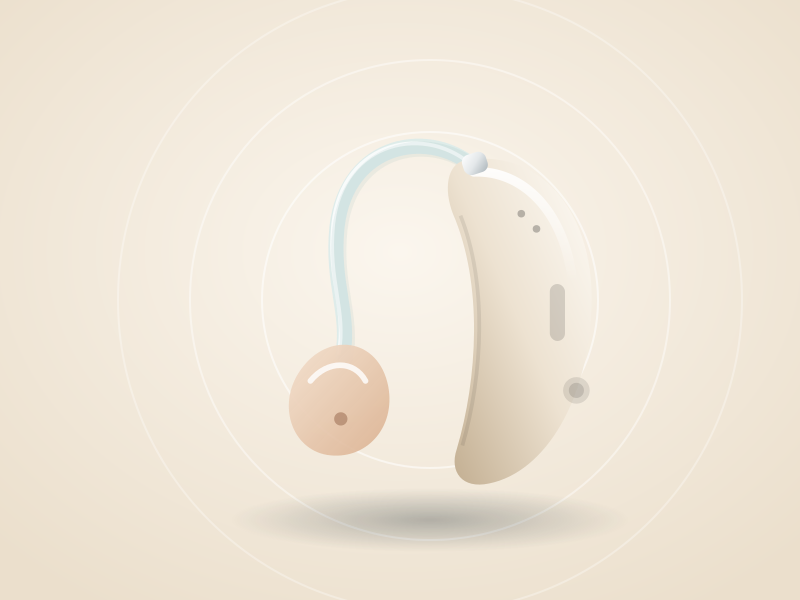
A small case rests behind the ear and sends sound through a clear tube to a dome or custom earmold. The most powerful style, and the easiest to handle.
Details & buy
Why people choose it
- The most amplification power
- Largest controls — easy for stiff fingers
- Long battery life
- Works with domes or custom earmolds
Ideal for anyone who puts power and easy handling first.
Check the current price, reviews and delivery date on Amazon. Amazon handles payment, shipping and returns.
RIC · Receiver-in-Canal
Receiver-in-Canal
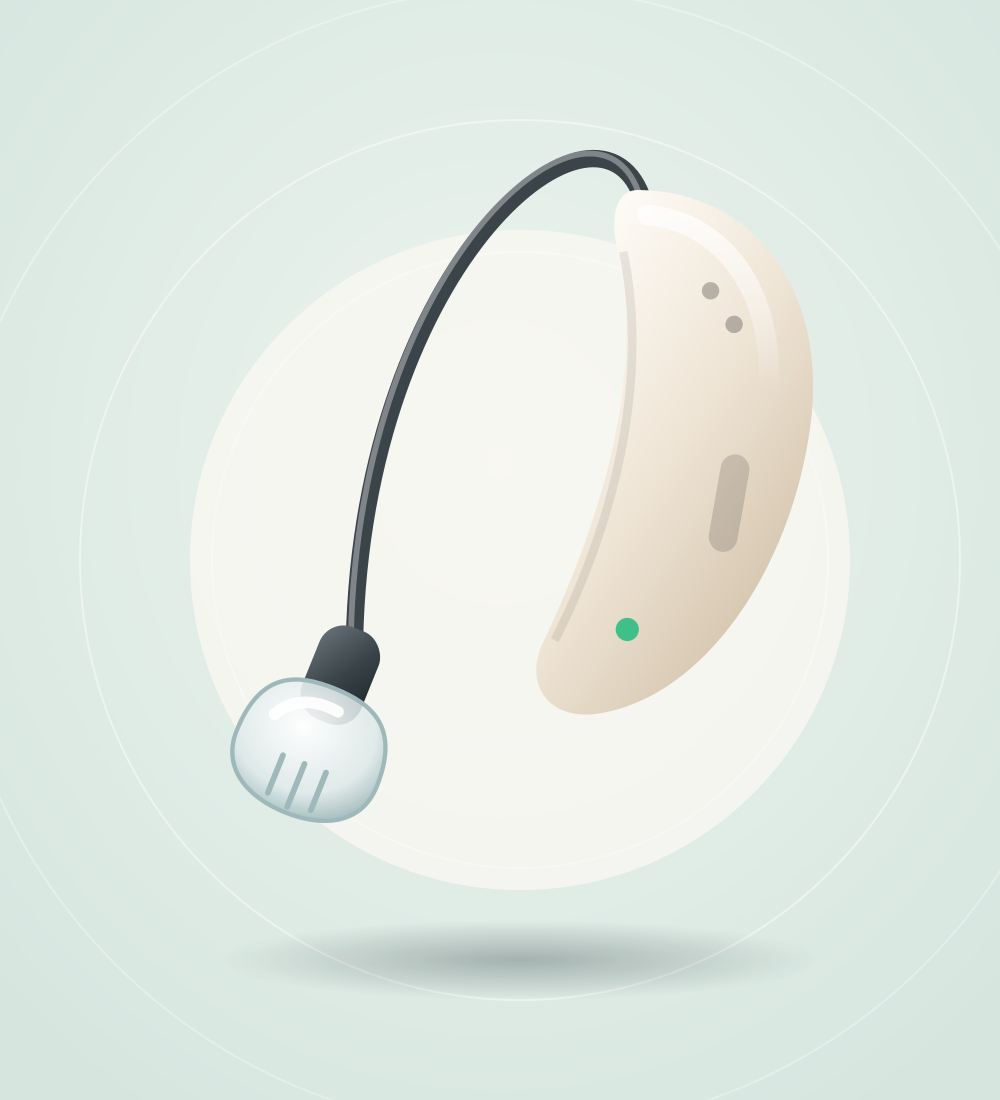
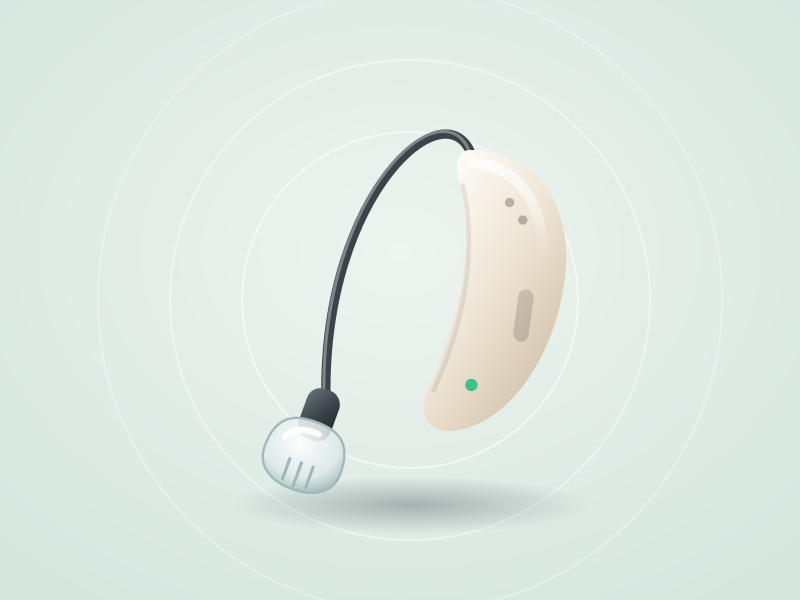
The most popular OTC style. A slim case sits behind the ear, joined by a nearly invisible wire to a tiny speaker inside the ear canal.
Details & buy
Why people choose it
- Natural, crisp sound
- Very discreet to wear
- Many are rechargeable with Bluetooth
- Comfortable from morning to night
Ideal for everyday conversations, family dinners and anyone who wants discretion without trade-offs.
Check the current price, reviews and delivery date on Amazon. Amazon handles payment, shipping and returns.
ITE · ITC · In-the-Ear
In-the-Ear
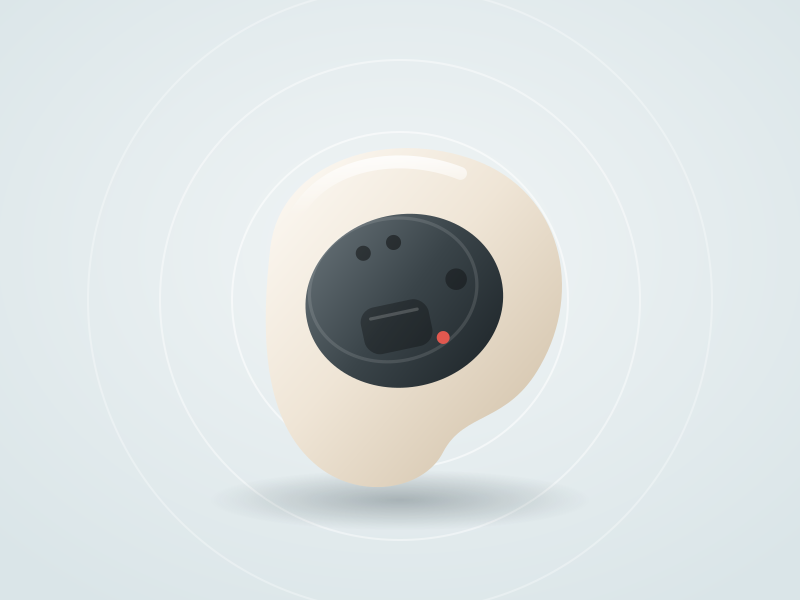
One self-contained shell that fills the outer bowl of the ear. Nothing behind the ear, so it plays nicely with glasses and face masks.
Details & buy
Why people choose it
- Nothing sits behind the ear
- Friendly with glasses and masks
- Easy to insert and remove
- Simple push-button controls
Ideal for people who wear glasses every day and want a one-piece device.
Check the current price, reviews and delivery date on Amazon. Amazon handles payment, shipping and returns.
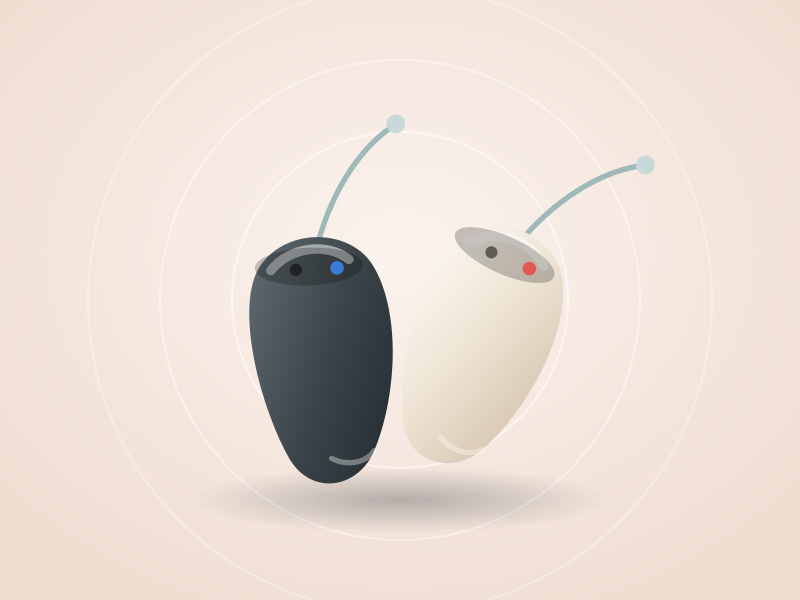
IIC · CIC · Invisible
Invisible-in-Canal
Tiny devices that sit deep in the ear canal and are practically invisible from the outside. The choice when appearance matters most.
Details & buy
Why people choose it
- Practically invisible
- Featherlight
- Less wind noise
- Uses your ear's natural acoustics
Ideal for mild to moderate hearing loss when appearance is the top priority.
Check the current price, reviews and delivery date on Amazon. Amazon handles payment, shipping and returns.
Side by side
Compare the four styles at a glance
| Feature | Behind-the-Ear (BTE) | Receiver-in-Canal (RIC) | In-the-Ear (ITE / ITC) | Invisible (IIC / CIC) |
|---|---|---|---|---|
| How visible | Visible behind the ear | Discreet | Slightly visible | Nearly invisible |
| Power | Highest | High | Medium | Medium |
| Ease of handling | Easiest | Easy | Easy | Needs good dexterity |
| Battery | Longest life | Often rechargeable | Average | Shortest |
| Bluetooth streaming | Common | Very common | Some models | Rare |
| Choose it if you want | Maximum power | Everyday discretion | One-piece comfort | Invisibility |
OTC guide
OTC, amplifier or prescription? Know before you buy.
Since the FDA created the over-the-counter category in 2022, you can buy real hearing aids without an appointment. Here’s how the three options differ.
Our recommendation for most
OTC hearing aids
FDA-regulated hearing aids you can buy without a prescription since 2022. They tune sound to your hearing, usually through a simple app.
- For adults 18+ with perceived mild to moderate hearing loss
- Self-fitting — no appointment needed
- Sold on Amazon and in stores
Good for occasional help
Sound amplifiers (PSAPs)
Personal sound amplification products make everything louder. Useful for TV or lectures, but they are not hearing aids.
- For people with normal hearing in specific situations
- No hearing personalization
- The most affordable option
For severe hearing loss
Prescription hearing aids
Fitted by an audiologist or hearing instrument specialist after a full exam. The right choice for severe loss or complex needs.
- Severe to profound loss, or anyone under 18
- Professional fitting and follow-ups
- Bought through a hearing clinic
See a doctor first if you have sudden hearing loss, hearing loss in only one ear, ear pain, drainage or dizziness.
How we pick
Independent by design. Honest by default.
No manufacturer can pay for a spot on this page. We earn a small commission from Amazon when you buy through our links — it never changes the price you pay or the order of our picks.
The Audira score
Six criteria, weighted for what matters most to older adults, combined into one number out of 10.
01
Sound in real rooms
Clear speech at the dinner table, in the car and in noisy restaurants — not just in quiet.
02
All-day comfort
Weight, fit and how it feels after eight hours, with or without glasses.
03
Easy for older hands
Button size, charging, app readability and how simple it is to put in and take out.
04
Battery & charging
Real-world hours per charge, charging case convenience and battery options.
05
Support & returns
Warranty length, trial period, customer service and Amazon return eligibility.
06
Honest value
What you get for the money compared with every alternative on our list.
How it works
From “What did you say?” to hearing clearly, in four steps
1
Check your hearing
Take a free online hearing test or visit a clinic. OTC hearing aids are for perceived mild to moderate loss.
2
Pick your style
Use our style guide and comparison table to match a design to your hands, glasses and lifestyle.
3
Order on Amazon
Choose a quantity and we open Amazon with it in your cart. Amazon handles payment, shipping and returns.
4
Give it 2–4 weeks
Wear them daily and adjust in the app. Your brain needs a few weeks to relearn everyday sounds.
FAQ
Straight answers to common questions
Medicare, HSA/FSA, prescriptions, returns — the questions families ask us most, answered in plain English.
What is the difference between an OTC hearing aid and a sound amplifier (PSAP)?
OTC hearing aids are FDA-regulated medical devices for adults 18 and older with perceived mild to moderate hearing loss. They shape sound to your hearing and often include a self-fitting test. Personal sound amplification products (PSAPs) simply make everything louder and are meant for people with normal hearing in specific situations, like watching TV. If you have trouble following conversations, start with an OTC hearing aid.
Do I need a prescription or a hearing test to buy OTC hearing aids?
No. Since October 2022, adults 18+ with perceived mild to moderate hearing loss can buy OTC hearing aids without a prescription, exam or fitting. A hearing test is still a smart first step. See a doctor first if you notice sudden hearing loss, hearing loss in only one ear, ear pain, drainage or dizziness.
Does Medicare cover hearing aids?
Original Medicare (Parts A and B) generally does not cover hearing aids or exams for fitting them. Many Medicare Advantage (Part C) plans include some hearing benefits, so check your plan documents or call your plan before you buy.
Can I pay with my HSA or FSA?
In most cases, yes. Hearing aids and hearing aid batteries are generally considered qualified medical expenses. Confirm with your plan administrator and keep your Amazon receipt.
Do I buy on this website or on Amazon?
On Amazon. When you click a button, we send you to Amazon with the product (and the quantity you chose) ready in your cart. Amazon handles payment, shipping, returns and customer service. We may earn a small commission, at no extra cost to you.
What if the hearing aids don't work for me?
Returns follow the policy shown on each Amazon listing, and many hearing aid makers add their own trial period and warranty. Give your brain two to four weeks to adjust — sounds can feel sharp at first — and check the return window before you buy.
Rechargeable or disposable batteries — which is better?
Rechargeable models are easier for most older adults: drop them in the case at night, no tiny batteries to change. Disposable batteries are cheaper up front and handy when traveling without a charger.
Take the first step
Get back to the conversations you love.
Start with our #1 pick, or browse every OTC hearing aid on Amazon — delivered fast, with easy returns.